Tripped Circuit Breaker in Your Pennant Hills Home
A breaker that keeps tripping is doing its job, it's just trying to tell you something's wrong upstream.
Here's what usually causes it, when it's urgent, and how we track down the actual fault.
Call (02) 9134 9029 and we'll talk you through what's likely going on.
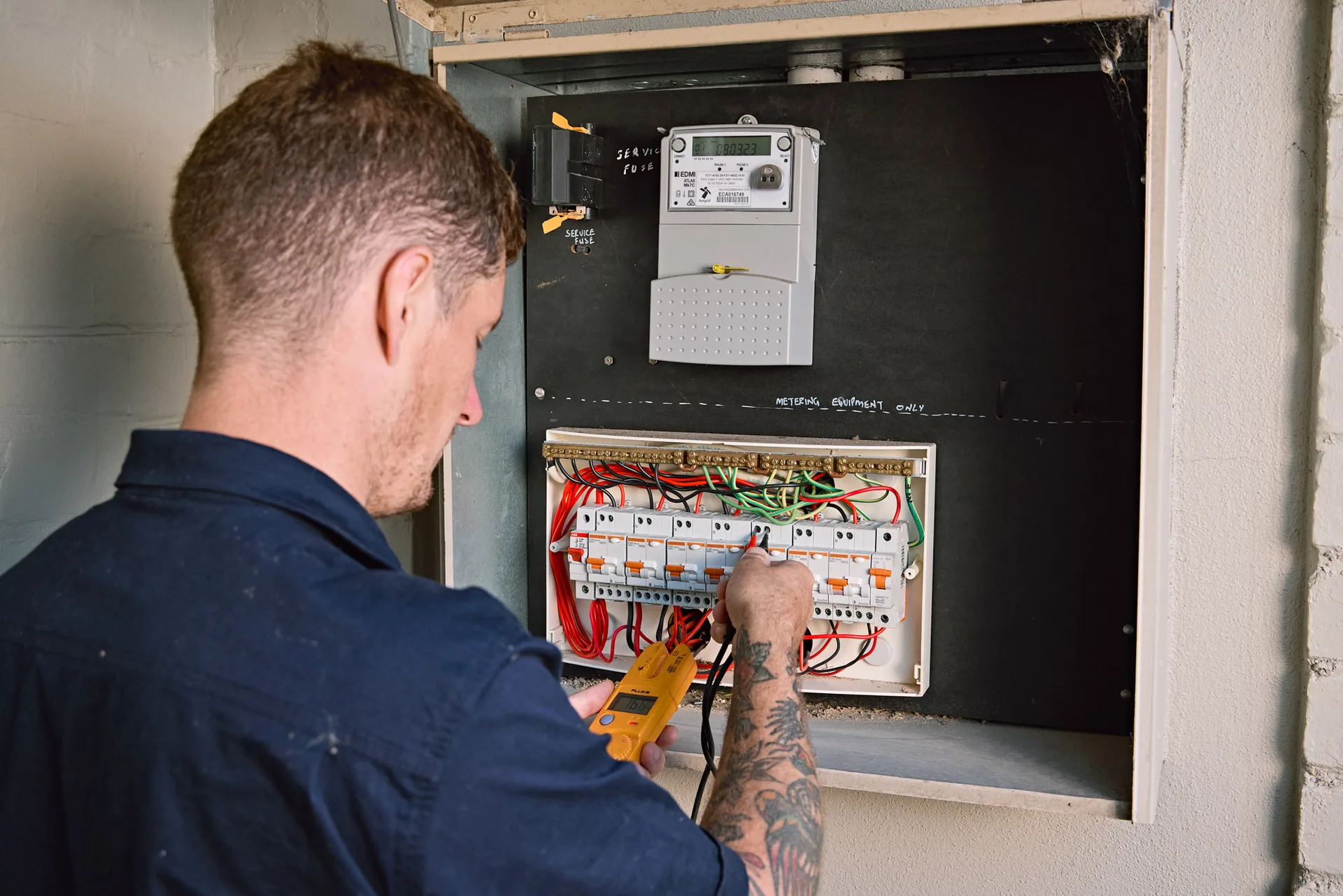
What a Tripped Circuit Breaker Actually Means
A circuit breaker is a safety device, not the problem itself.
It cuts power the instant it senses more current flowing than the circuit is rated to carry, or a fault to earth.
Every trip has a cause upstream of the switch. Overload, a fault, moisture, or an appliance drawing more than it should.
A breaker that trips once and resets cleanly is usually a one-off. One that won't stay on, or trips the moment you reset it, is telling you the underlying issue is still present.
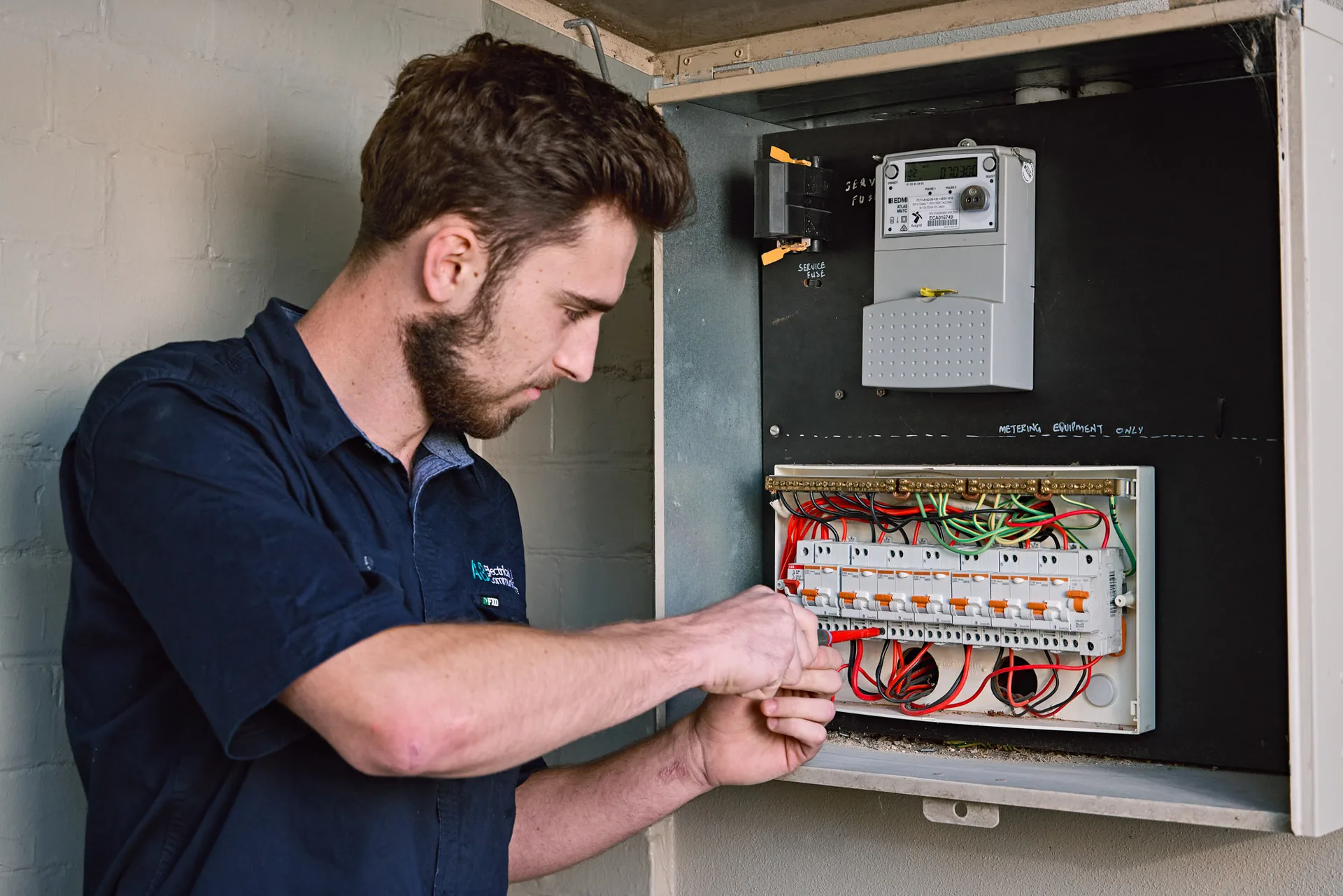
The Most Likely Causes
Here's what we find most, from the everyday to the rare:
- Circuit overload: several appliances all pulling power from one circuit simultaneously
- A faulty appliance: an internal fault drawing current the circuit reads as a problem
- A short circuit: wires touching where they shouldn't, often from age, heat or damage
- Earth leakage: a safety switch (RCD) detecting current escaping the circuit somewhere
- Moisture: dampness in an outdoor point, a leak, or a storm reaching an outlet
- A worn breaker: the switch itself ageing and tripping below its rated threshold
None of these are guesswork on our end. Testing tells us which one applies before anything gets touched.
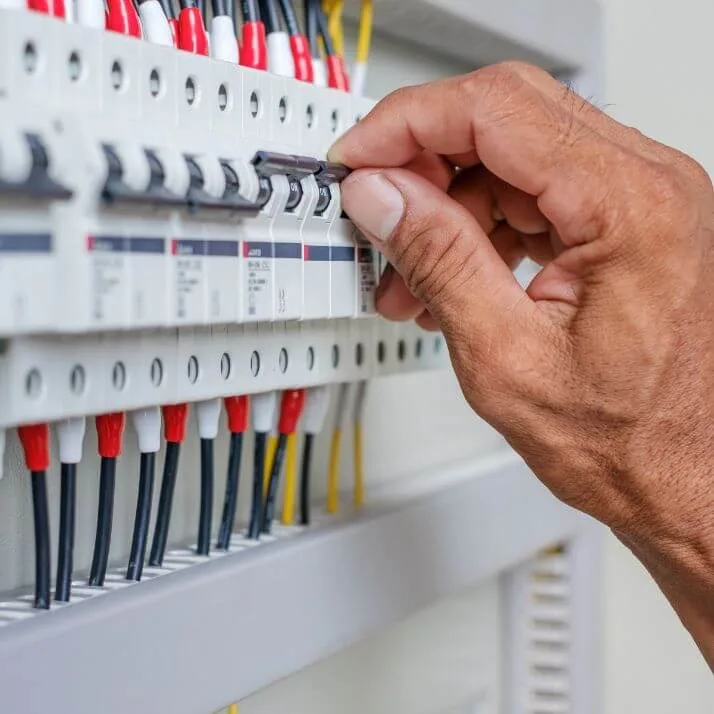
When a Tripped Circuit Breaker Is Urgent
Most trips are a nuisance, not a crisis. A handful of signs change that.
Call now rather than wait if the breaker refuses to stay reset, if the switchboard itself feels warm or smells hot, or if resetting it drags another circuit down too.
A safety switch tripping the instant water touches an outdoor point is doing exactly what it should, and still worth a prompt look if it recurs.
If nothing obvious explains a repeat trip, that's reason enough to call rather than keep flicking the switch back on.
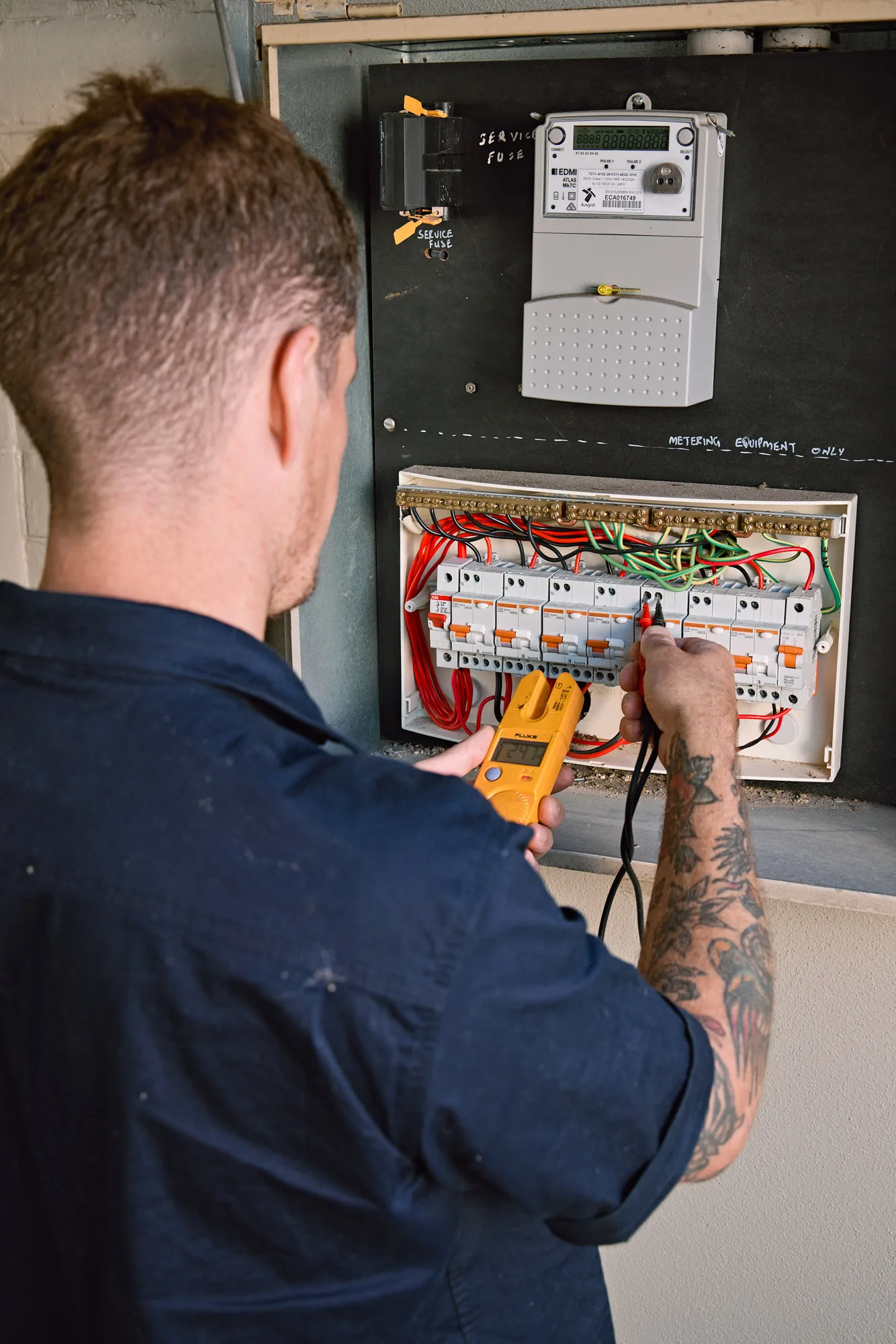
What To Do Right Now
- Unplug whatever was running when the breaker tripped, if you know what it was.
- Reset once. If it holds, you've likely found the cause. If it trips immediately, stop resetting it.
- Check for warmth or smell at the switchboard without touching anything live.
- Ring (02) 9134 9029 if it won't hold, or if you're not confident what tripped it.
How We Fix It, Step by Step
We isolate the circuit and test it under load, rather than just resetting the breaker and hoping it holds.
That means checking connected appliances one by one, testing the circuit's insulation and earth path, and inspecting the breaker itself for wear.
Where the fault traces to the breaker's age rather than the wiring, a straight swap often solves it. Where it's a wiring fault, we isolate and repair the section causing the leakage or short.
A written quote covers whichever path the testing points to, before any of it happens.
Where the work is notifiable, Fair Trading gets its Certificate of Compliance once the fix is tested and finished.
Why Pennant Hills's Housing Makes This Common
A lot of Pennant Hills homes had safety switches retrofitted onto boards built well before RCDs were required, rather than designed in from the start.
That retrofit works well in most cases, but it means the safety switch is sometimes protecting more circuits than it comfortably should, given how the board was originally laid out.
The result is a switch that trips under combined load from several rooms at once, even when no single circuit is doing anything wrong on its own.
Splitting that shared protection across more than one switch is often the actual fix, not chasing a fault that was never really there.
We see this most in houses that added a safety switch during a later renovation rather than at the original build, which describes a good share of the suburb's older stock.
Preventing the Next Trip
A repeat trip is a pattern worth acting on, not just resetting:
- Splitting an overloaded safety switch across two or more separate circuits
- Upgrading old breakers that trip below their rated capacity
- Spreading heavy appliances so they're not stacked on one circuit
- A board review where several circuits are all sharing the same protection
Ask about switchboard upgrades for the board-wide version, or book electrical repairs if it's really just the one circuit at fault.
Either way, the goal is a board that copes with normal daily load without a repeat visit six months from now.
Nearby Suburbs and Related Faults
Still on fuses rather than breakers? Our blown fuse page walks through the same overload on older hardware.
Clicking, buzzing or humming alongside the trips is its own fault, covered separately under noisy switchboard sounds.
We chase this fault down across Pennant Hills, out to Thornleigh and Beecroft, and everywhere else in the Hornsby Shire we cover.

Get in Touch Today Before It Gets Worse
A breaker that won't hold isn't something to keep working around.
Ring (02) 9134 9029 and get $50 off your first service on top of a written quote, or fill in the contact form and we'll come back to you.
Common questions
Common Tripped Circuit Breaker FAQs
Is a tripped circuit breaker an emergency?
Rarely, if it resets and holds. It becomes urgent if it trips again within seconds, if you can smell burning near the board, or if it won't stay on at all.
Can a tripped breaker cause a fire?
A breaker tripping is the safety feature working, cutting power before wiring overheats. The fire risk sits in whatever's forcing the trips, which is what we're actually chasing.
Is it my appliance or my wiring?
Unplug everything on that circuit, then reset the breaker. It holding points to an appliance; tripping again points to the circuit itself.
Why does it only happen at night or when appliances run?
Evening load is heaviest: heating, cooking and lighting all drawing at once. A circuit running close to its limit often only tips over under that combined load.
Can I keep using the circuit while I wait?
Leave it switched off rather than resetting it repeatedly. Each reset without knowing the cause just repeats whatever stress caused the trip in the first place.
How fast can you get to Pennant Hills?
Often same or next day for a standard booking, and we prioritise genuine emergencies the moment you call.